
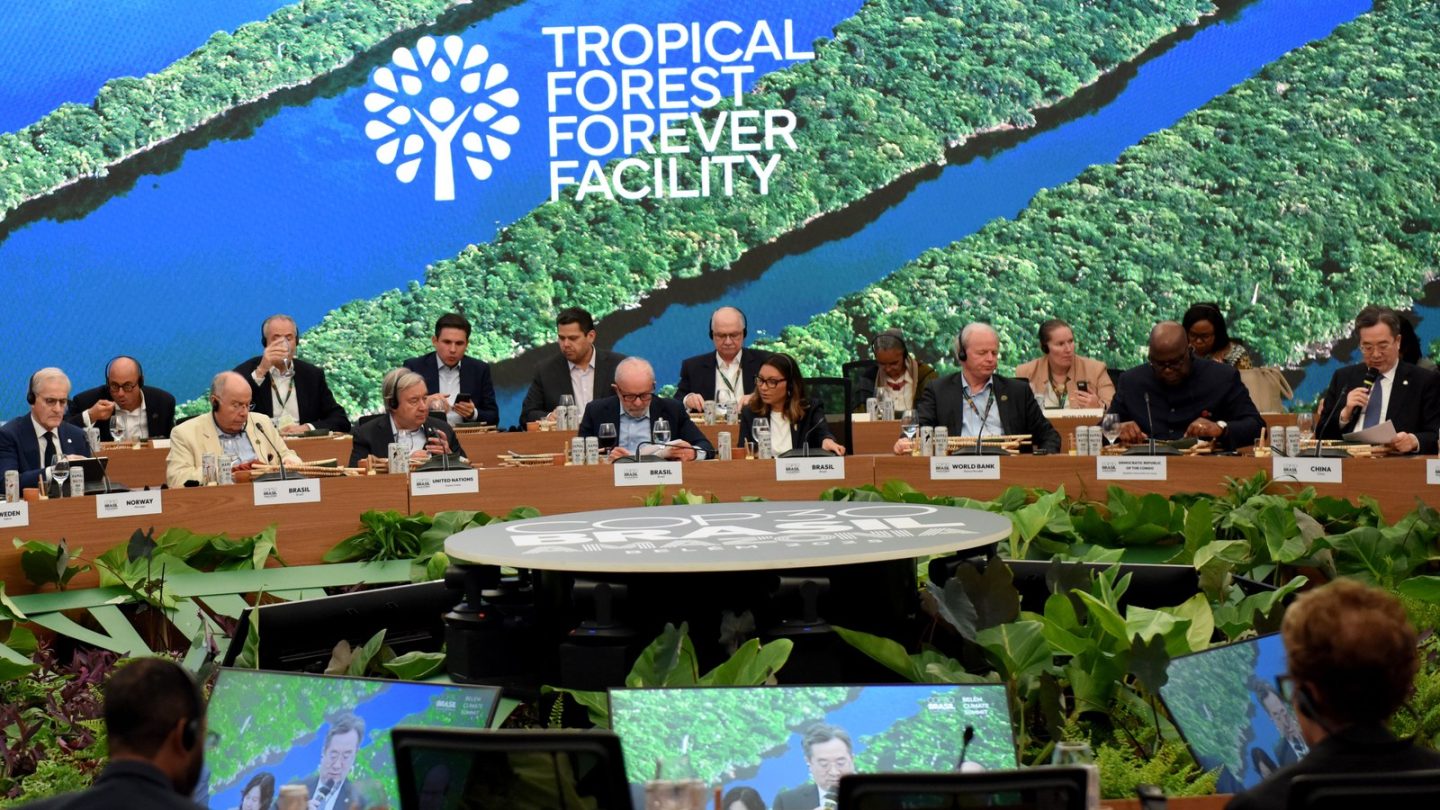
The United Kingdom has pledged to invest £400 million, about $541 million, in the Tropical Forests Forever Facility, or TFFF. The Brazil-led initiative is designed to finance countries that keep tropical forests standing. The announcement is a significant political signal, but it is not yet a completed disbursement or money received by forest countries.
The British government will structure the contribution as a loan and describes itself as an investor rather than a donor. That distinction defines the operation: capital must earn a return and be repaid under the instrument’s terms. London helped design the facility but did not contribute when it launched at COP30 in 2025, a decision criticised at the time.
Conditions remain outstanding. According to the UK statement cited by Reuters, the pledge is subject to final due diligence and Britain securing a role in the fund’s oversight. The announcement, final contract, transfer and operational capital are therefore separate stages. Public reporting should identify timing, financial costs, governance and exit conditions.
TFFF aims to mobilise $125 billion, including $25 billion from governments and public institutions. Brazil is first targeting $10 billion from public sources, and officials expect that threshold could be reached by year-end. Meeting the initial target may leverage more capital, but the overall projection remains an objective rather than assets already available.
The model invests public, philanthropic and private capital in a diversified portfolio and uses returns to pay countries for forest conservation. It seeks predictable, long-term flows rather than short project grants. Its viability depends on investment returns, costs and performance payments remaining sustainable under adverse market conditions.
Conservation cannot be measured only through aggregate forest cover. The mechanism needs transparent rules for degradation, deforestation and restoration, satellite verification combined with ground control, and social safeguards. Official design allocates at least 20 per cent of forest payments to Indigenous Peoples and local communities; the test is whether funds arrive directly, promptly and with their participation in governance.
WWF-Brazil executive director Mauricio Voivodic called the commitment significant because it changes how tropical forests are recognised and financed. Future evaluation must distinguish promised mobilisation, capital invested, returns, payments and hectares conserved without shifting pressures elsewhere. A loan can increase scale, but its environmental value will be proven by additional, verifiable and equitable outcomes.