
The Hood River County forestry project in Oregon has issued its first carbon credits, with the units receiving the Core Carbon Principles label promoted by the Integrity Council for the Voluntary Carbon Market. It is an important test for improved forest management credits: rather than planting new trees, the project changes harvest timing so that more carbon remains in a working forest.
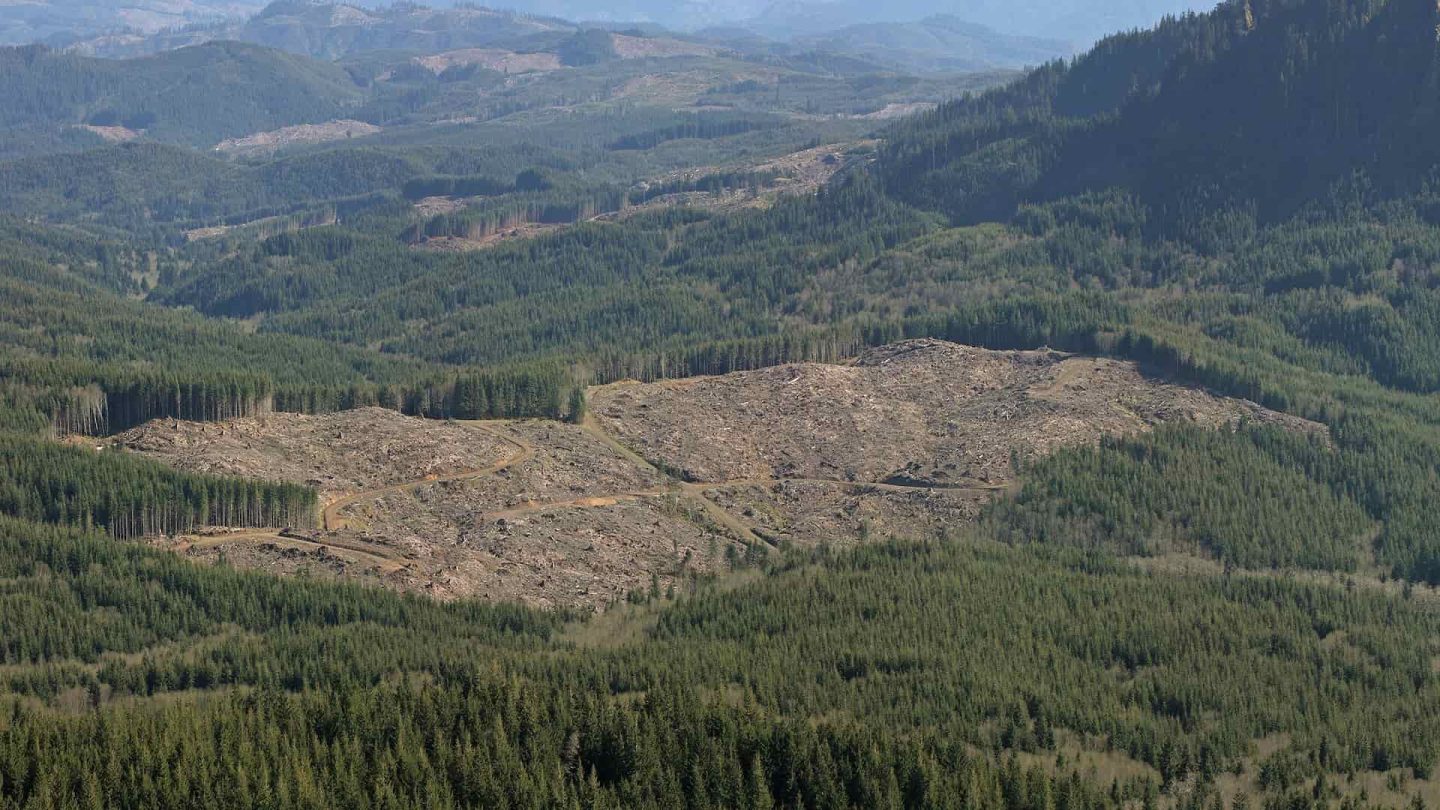
The Climate Trust developed the initiative with the county forestry department. It is registered under Version 2.1 of ACR's Improved Forest Management methodology for non-federal U.S. forestland and covers more than 32,000 acres — about 13,000 hectares — of Douglas-fir, ponderosa pine and other Pacific Northwest forest, much of it with trees more than 65 years old.
The central change concerns harvest age. In a region with a strong timber market, landowners often harvest stands once they are more than 45 years old; the county is committing to extend the average rotation to as much as 90 years. The difference between expected management without the project and carbon retained by delaying harvests provides the basis for calculating credits.
The project will use a dynamic baseline that must be recalculated every few years. This review is designed to prevent a comparison fixed at the outset from continuing to generate credits after timber prices, regional practice or likely landowner behavior has changed. The announcement did not disclose the number of units issued or their sale price.
Revenue gives the county an alternative to increasing timber harvests to fund public services. The administration plans to support a multiple-use model combining timber income, recreation and wildlife habitat, while also purchasing additional forestland for enrollment in the project. The incentive works when keeping trees standing longer can compete economically with bringing harvests forward.
The CCP label indicates that the crediting program and methodology category passed criteria for governance, tracking, additionality, quantification, permanence and safeguards; it does not by itself remove project-level risks. Wildfire, pests, displaced logging and overly favorable assumptions about the no-project scenario can all reduce the actual climate benefit.
Credit quality will therefore depend on evidence produced after the first issuance: forest inventories, updated baselines, recorded losses, reversal buffers and traceable use of revenue. If monitoring shows that longer rotations store additional carbon without shifting pressure to other forests, Hood River may offer a model for timber counties; if not, the label will not substitute for performance.