
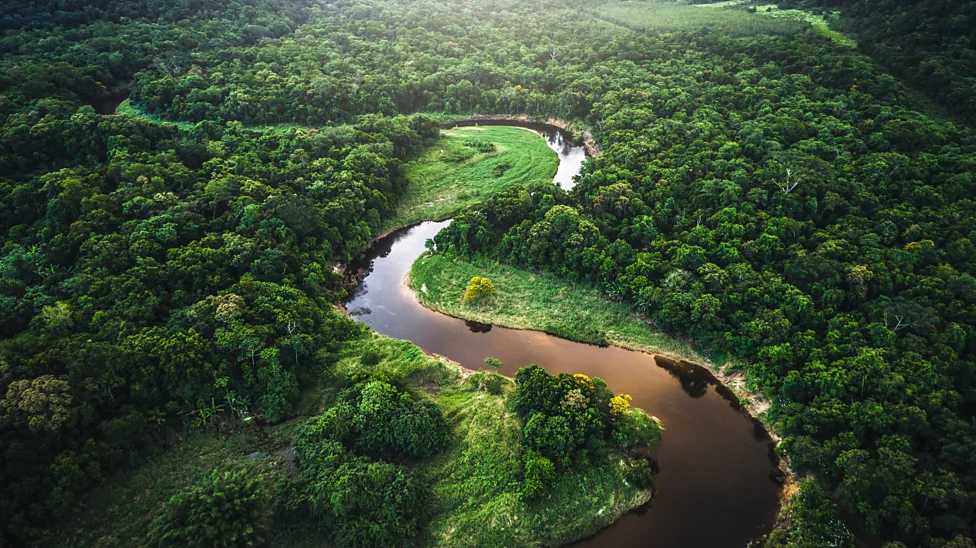
In the mountains of southern Brazil, far from the Amazon, lies one of the world's most unique ecosystems: a mosaic of Araucaria forests and campos grasslands that has survived for millions of years in the country's coldest region. The Araucaria trees, close relatives of the monkey puzzle tree cultivated in Britain, are a living relic of an era when their relatives fed the dinosaurs.
However, this ancient landscape is in danger. One hundred and fifty years of logging and agricultural expansion have destroyed most of this forest-grassland mosaic. Moreover, the cool, wet conditions it needs are rapidly disappearing due to climate change. To conserve this ecosystem, an international team of researchers, led by Oliver Wilson of the University of Lincoln, decided to look to the past.
The research, recently published, used a combination of approaches to understand the last 6,000 years of Araucaria forest history. Pollen and tiny charcoal fragments preserved in layers of peat were analysed to show how vegetation and fire activity changed over time. These results were compared with archaeological findings, a record of past rainfall from a nearby cave, and computer models that predicted how the forest would have behaved if climate alone had driven its dynamics.
The results revealed a surprise. When the forests expanded, they generally did so at the times and places predicted by the climate models. However, vegetation change was very uneven across the region. While most pollen records showed only minor expansions, some sites, especially those near archaeological sites, experienced drastic increases in Araucaria pollen. This patchy response suggests that forest dynamics were driven by something more complex than just broad-scale climatic changes.
The answer lies in the interaction between climate change and fire dynamics. Fire is a natural part of the region, and the campos grasslands burn readily, preventing forest expansion. However, mature Araucaria forest patches are fairly fireproof. In the past, changes towards warmer and wetter conditions, which slightly favoured the forests and reduced fire, had limited effects in most places. Major changes occurred where the landscape was already close to a tipping point, and only a little more forest and a little less fire were needed to spark a chain reaction.
Most revealingly, some pollen records showed periods with both high fire activity and high Araucaria forest presence, along with evidence of crop cultivation and slight increases in Araucaria pollen. These are the direct fingerprints of how the Southern Jê Indigenous people shaped this ecosystem over the last 2,000 years. Their management practices, which included using fire to clear spaces for crops like maize and beans, did not lead to forest loss but may have been part of an agroforestry system.
The findings of this research not only illuminate the past but are invaluable for the future of this ecosystem. Seeing how climate changes pushed forest-grassland dynamics over tipping points in unpredictable ways is a worry, as conditions in southern Brazil continue to get warmer and wetter, making it harder to conserve both the Araucaria forest and the campos grasslands.
Furthermore, the revelations about the region's human history are crucial. Southern Brazil still has Southern Jê communities, such as the Kaingang and Laklãnõ Xokleng. The results highlight that there is no inherent conflict between people and the Araucaria forest. As these Indigenous communities continue to fight for their rights to their ancestral lands, conservation would do well to learn from them and to establish better ways of linking people with the forests before it's too late.